By the numbers
57
repeatable questions in the regression matrix
7
structured sources of portfolio truth
4
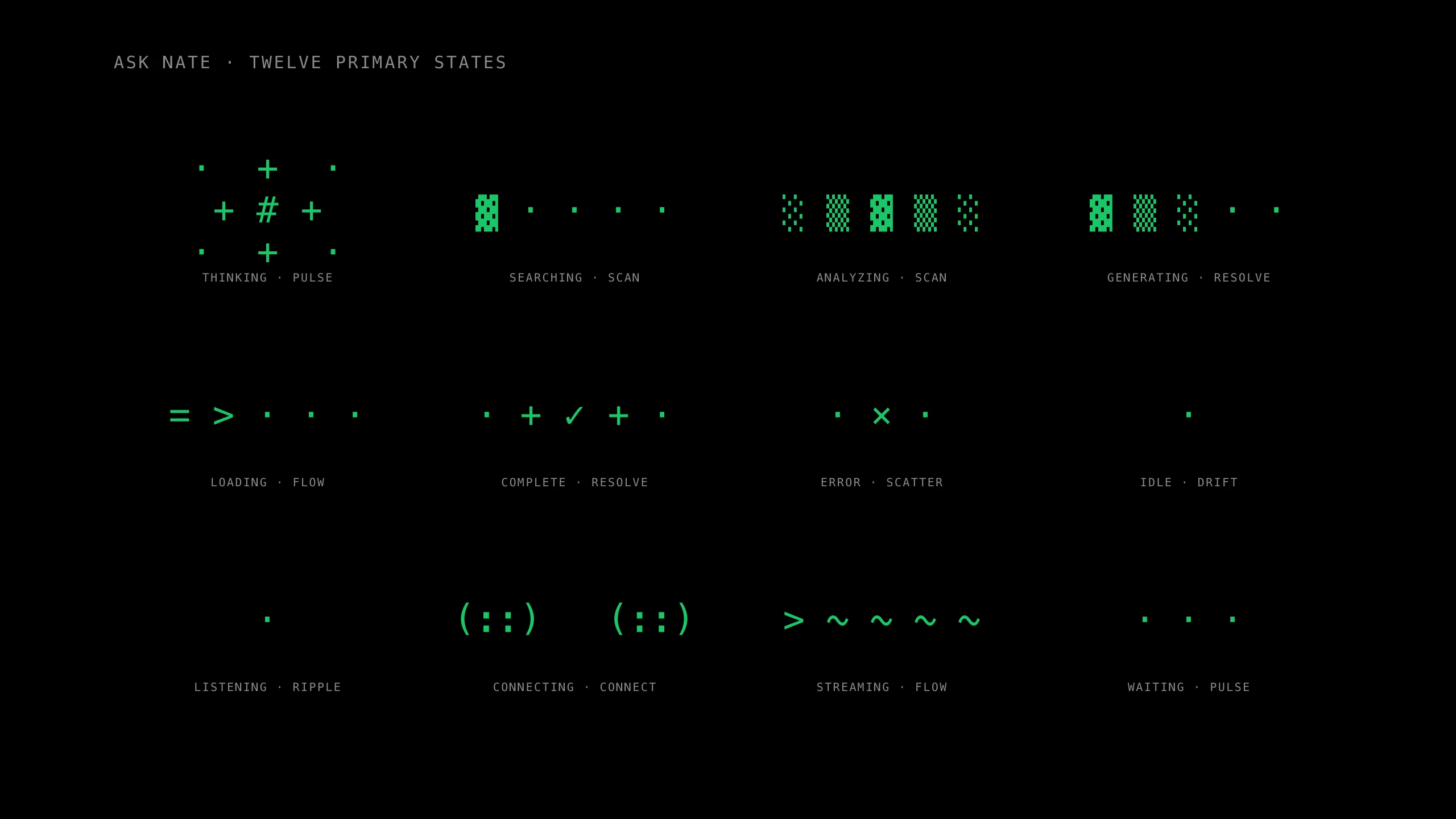
primary reply states before error handling

Product brief
Ask Nate is a conversational portfolio experience that helps visitors explore my work, experience, and design approach through direct questions and relevant case study recommendations.
Visitors ask about projects, roles, skills, and experience, then receive a concise answer and relevant case study recommendations. The product needed to feel useful without asking visitors to trust fluent but unsupported prose.
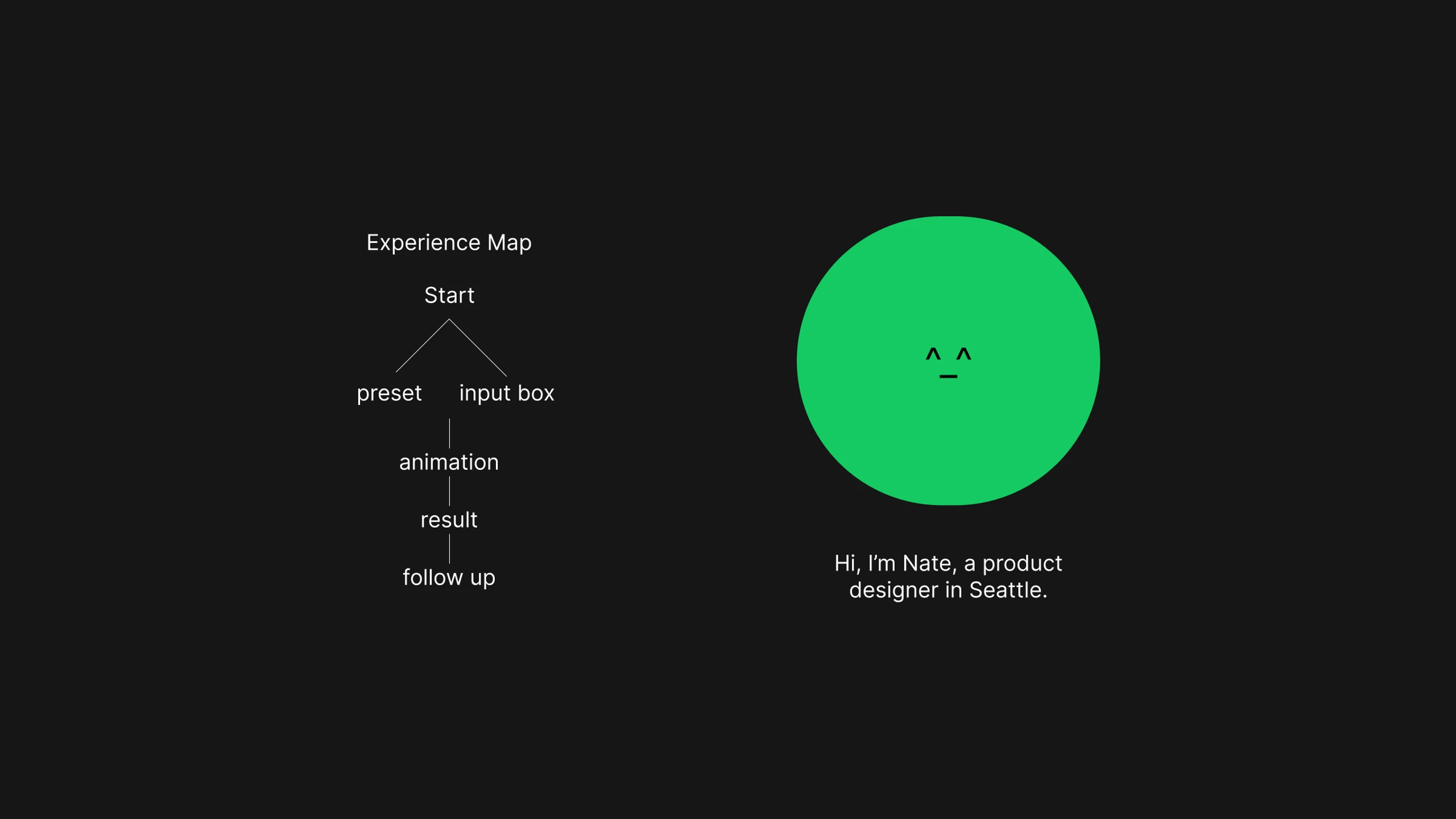
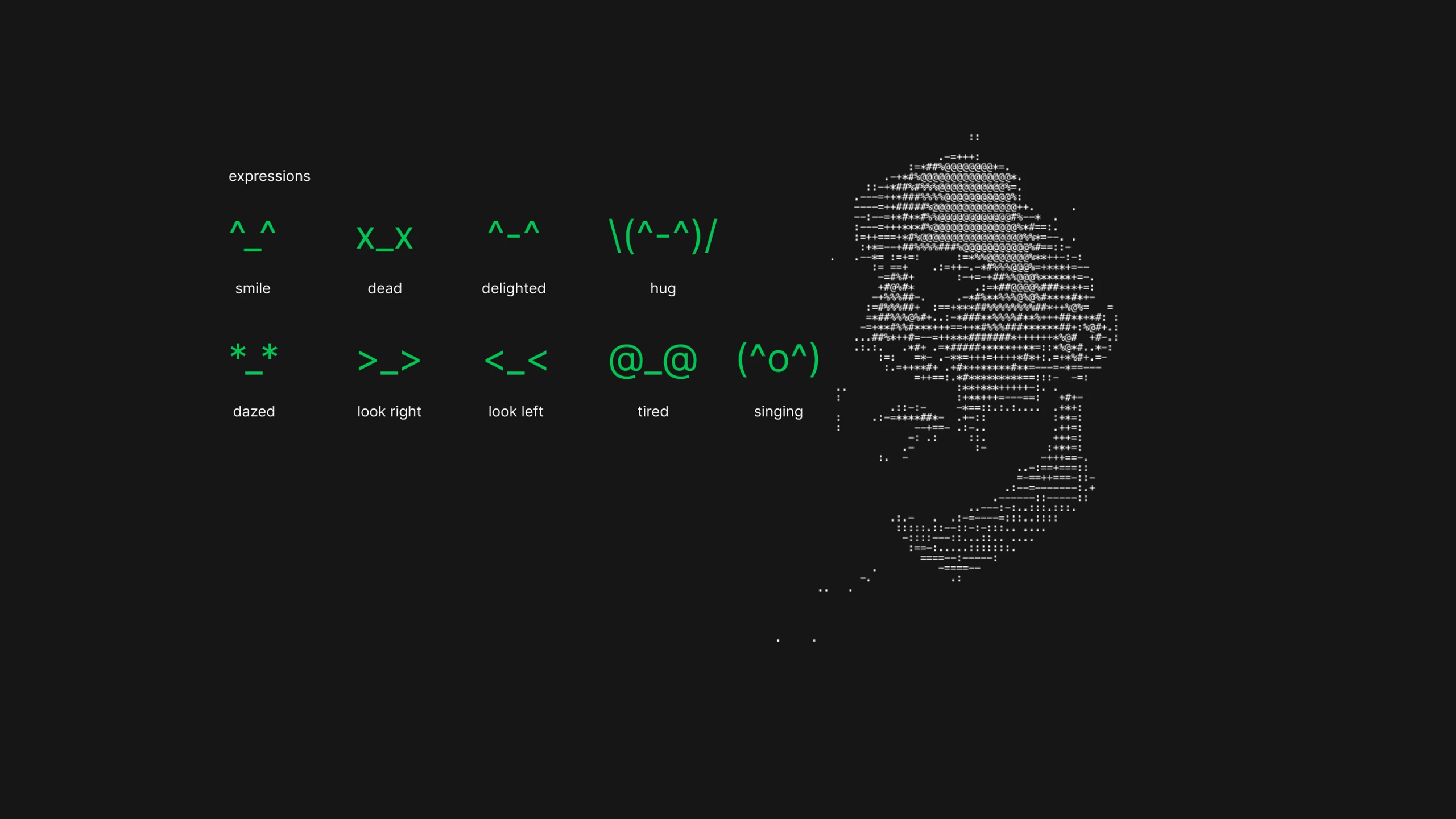
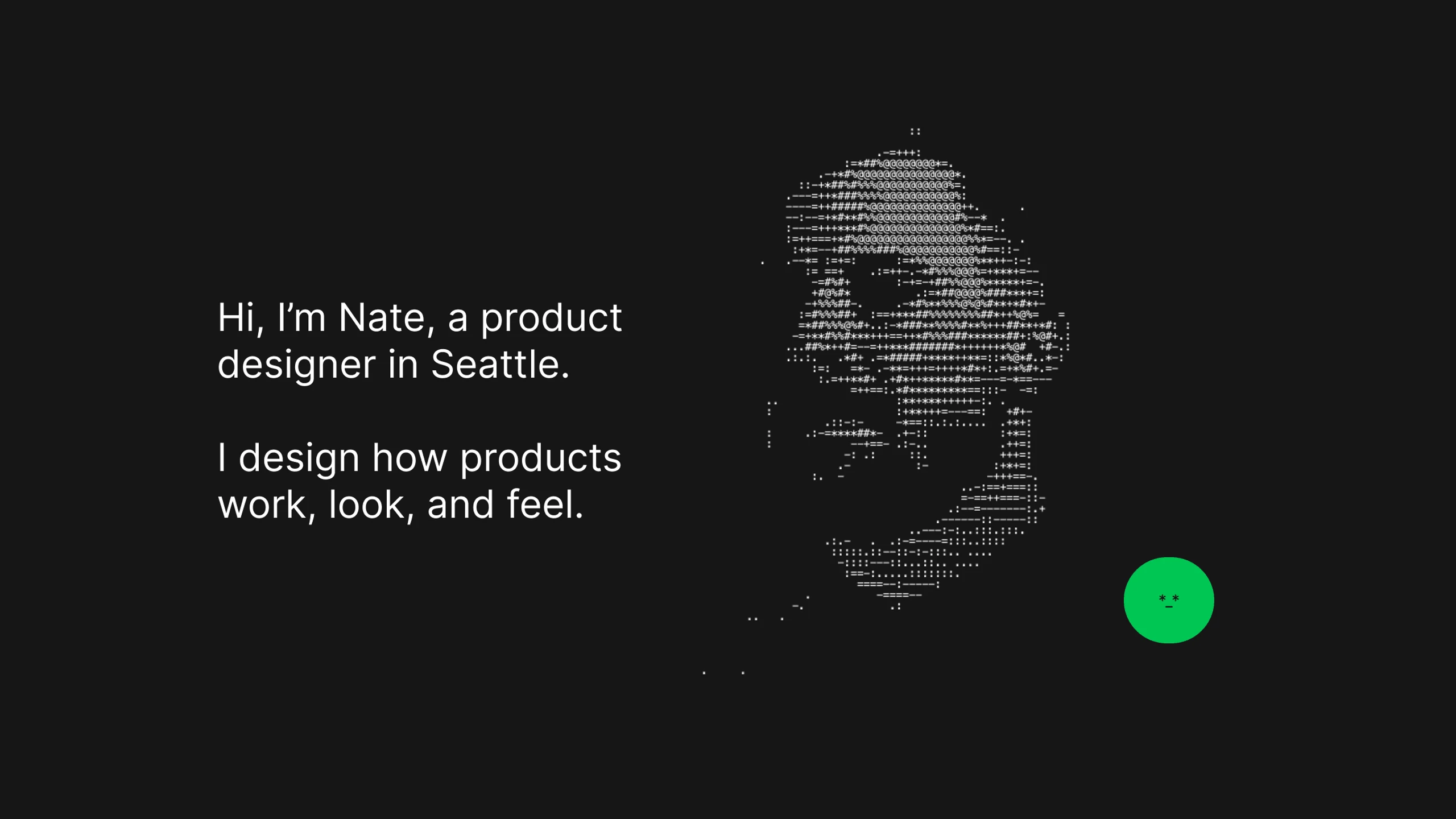
Early studies tested the character, ASCII portrait, expression language, scale, and question to follow up journey before the product direction settled.
57
repeatable questions in the regression matrix
7
structured sources of portfolio truth
4
primary reply states before error handling
I designed and built the conversational prototype, prompt rules, structured evidence model, project registry, link attachment behavior, chat interface, and ASCII feedback language. I also created the repeatable question set and automated checks that keep knowledge, live routes, and starter questions aligned with the published portfolio.
Role
Product Designer
Timeframe
2026
Disciplines
Product Design, Interaction Design, Design Systems
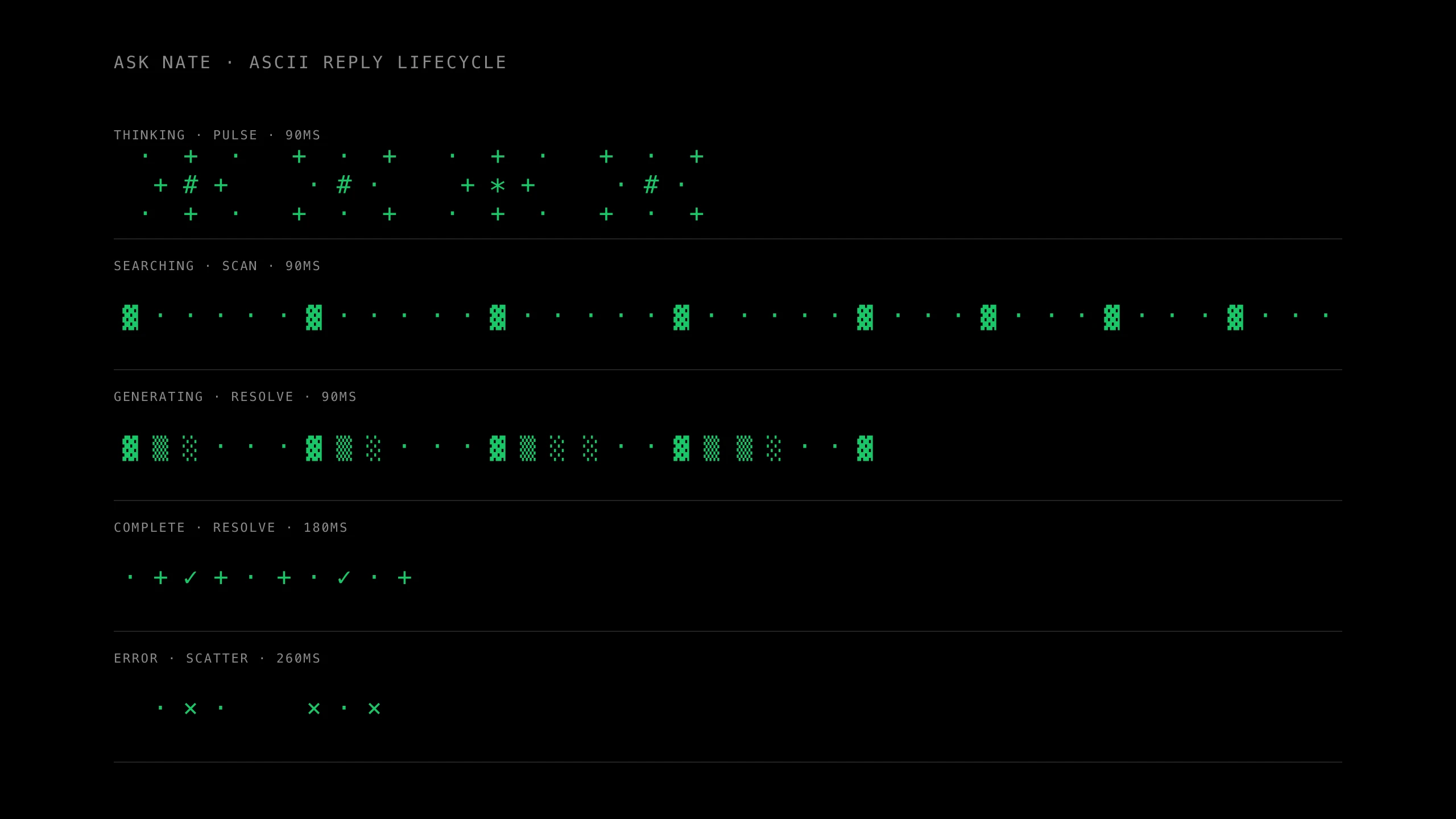
Ask Nate ships with structured evidence, approved routes, the 57 question regression matrix, automated knowledge and link checks, randomized starter questions, and a shared ASCII feedback language. The live chat runs on this site: and ask about this case study.
Evidence model
Structured project fields and evidence categories feed prompt-backed answers
Link attachment
Approved live routes only. Exact title and alias matching. No guessed URLs
Feedback language
ASCII motion with primary states and micro behaviors shipping sitewide, including reduced motion
Platform
Web (Next.js)
Help visitors explore my work through direct questions while keeping every answer grounded in verified portfolio evidence and every project link under application control.
A conversational layer could make a large portfolio easier to explore, but invented claims, inaccurate recommendations, or unpublished links would weaken trust in the work it was meant to explain.
Visitors needed direct answers to specific questions, a useful next step, and clear signals while a reply was preparing. They should not have to verify whether a recommended project or route was real.
Should the model generate the complete experience, including project links, or should the application control evidence, routes, and presentation? I let the model understand the question and write a concise response from supplied evidence, while the application attaches approved routes, manages interface states, and presents project components. The tradeoff: factual claims still depend on the model following the evidence rules, so deterministic claim validation remains an open improvement.
Core response rules
Sources of truth
| Question | Expected evidence | Next action |
|---|---|---|
| Which projects best show your product design work? | Role fit product set with at most five live titles | Live case study links |
| What design systems have you built? | The design system behind this site, and the engines shipped as libraries | Live design system case studies |
| How does the ASCII engine work? | Engine case study evidence only | Live engine case study |
| What results can you verify? | Project bound metrics only | Named result projects |
| Do you have a resume? | Nothing in the knowledge block | Decline and offer email |
| Where have you worked? | Nothing in the knowledge block | Decline and offer email |
Ask Nate only stays accurate when evidence and routes are application-controlled. Prompt rules ground the voice, but claim validation before display is still an open improvement. Waiting works when feedback is a shared ASCII language, not a one-off loader. Deterministic claim validation and a recorded chat walkthrough remain open improvements.