By the numbers
30
built in presets across seven families
362
automated tests with coverage floors, run on every push
16.7
milliseconds per frame is the budget; every hero look measures under it at 1080p
Product brief
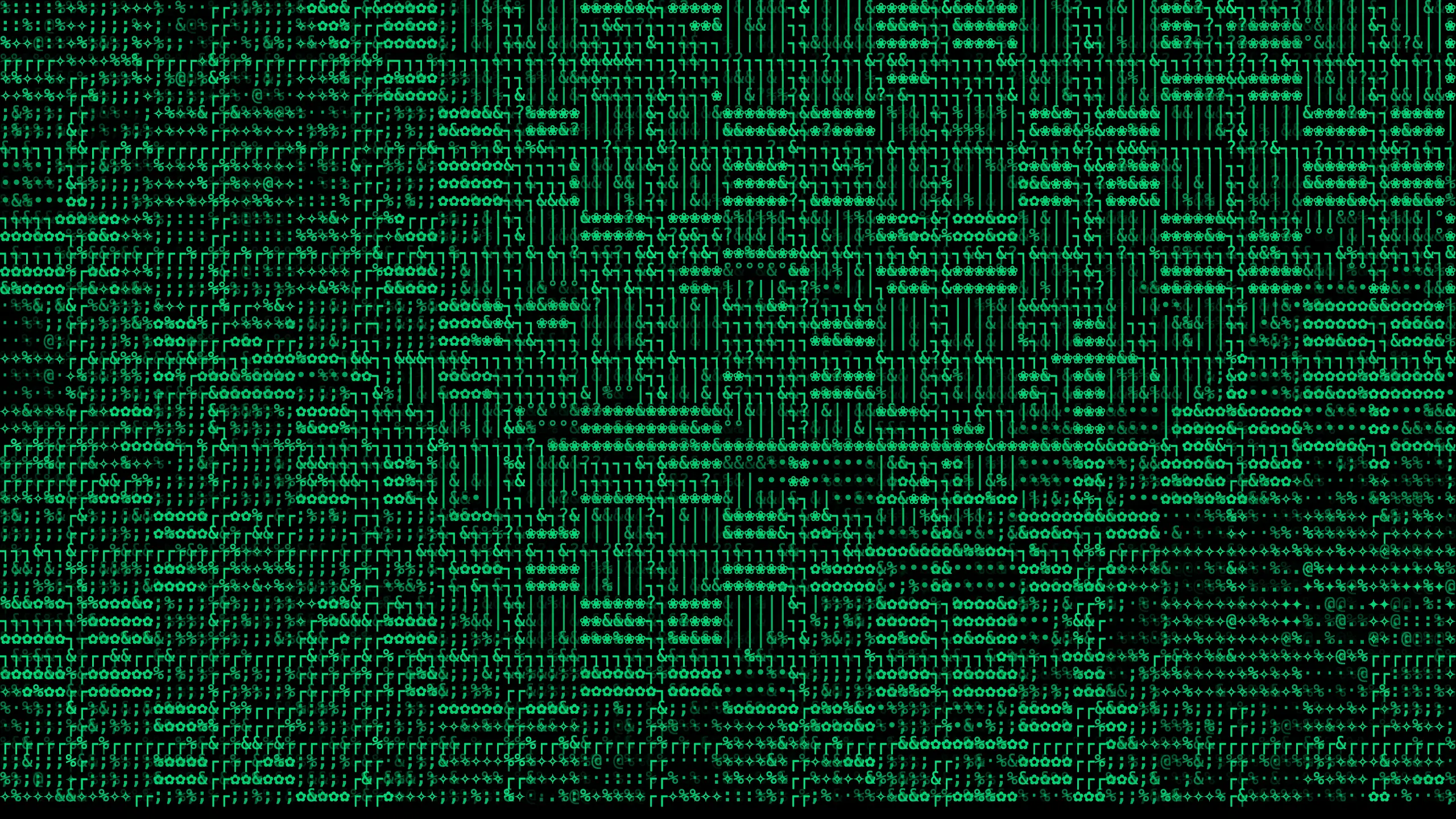
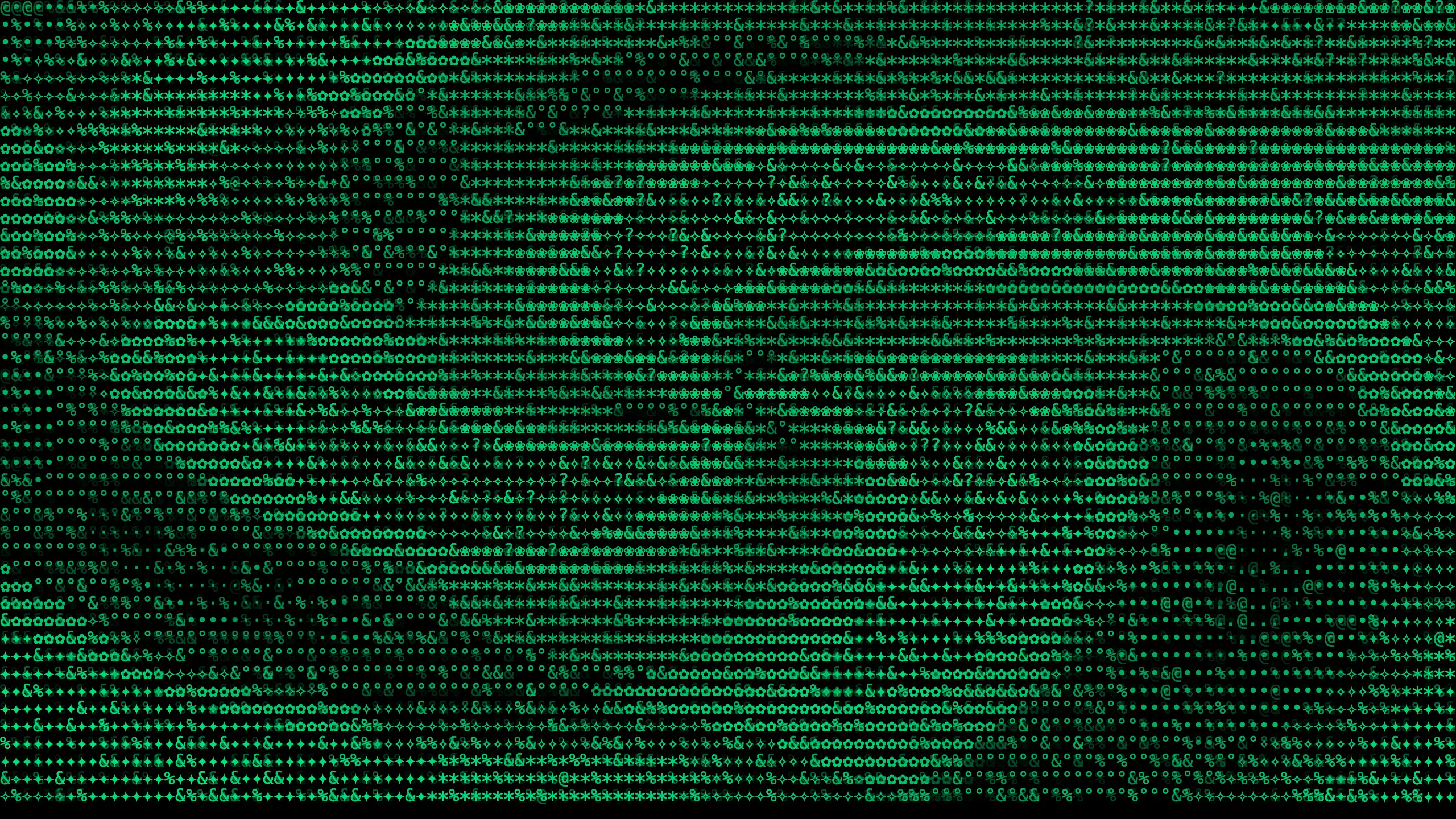
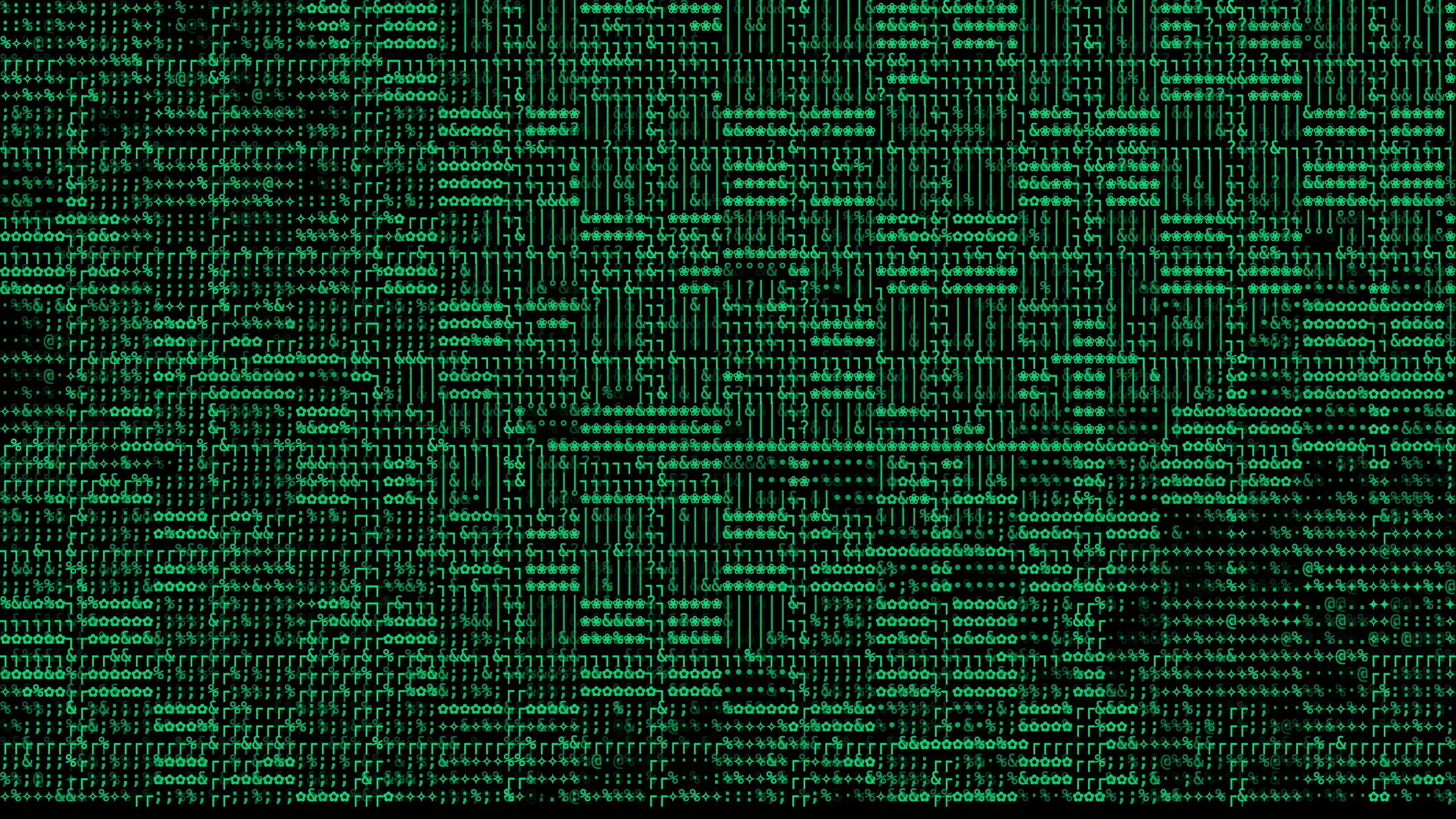
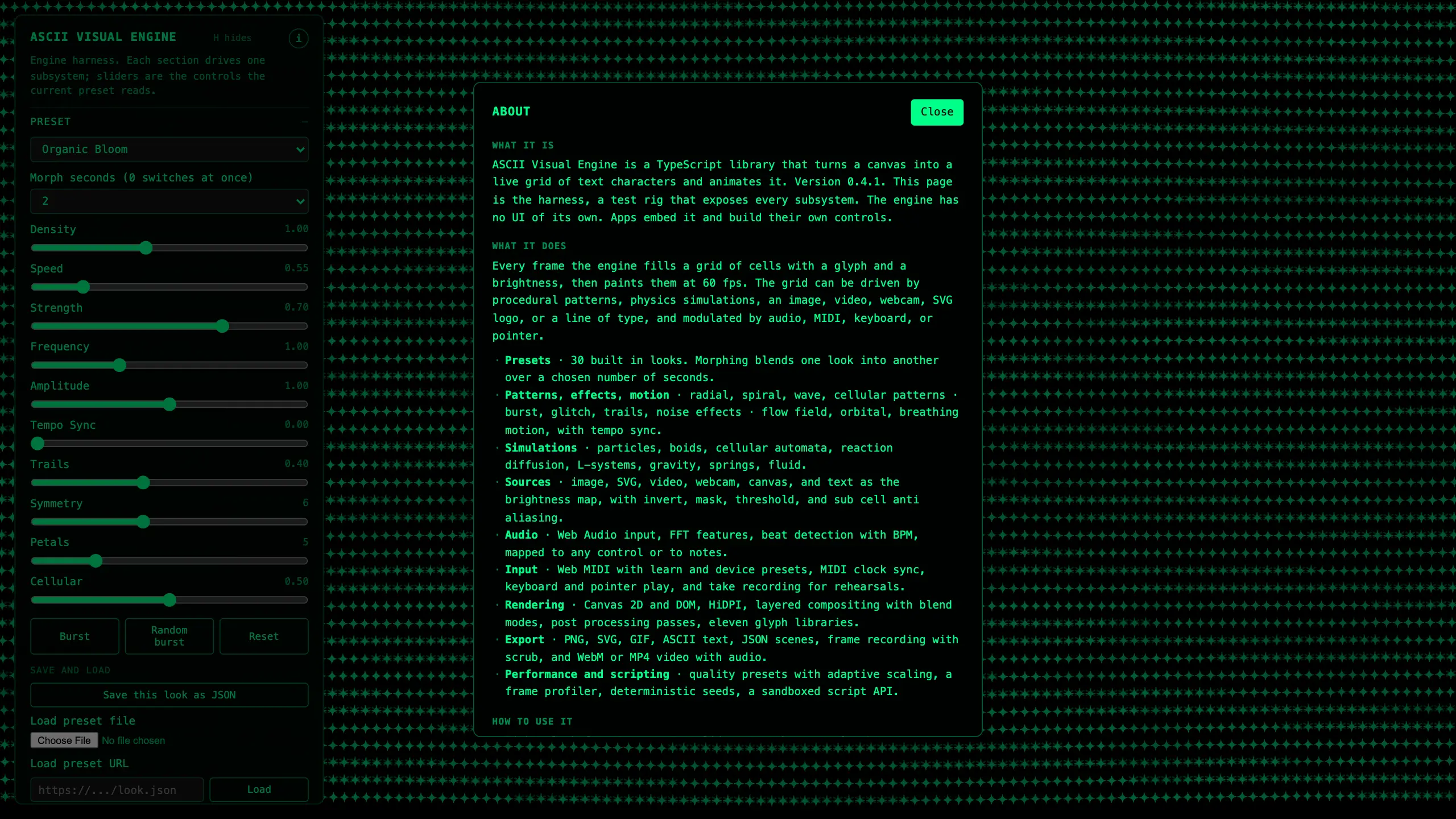
The ASCII Visual Engine turns a grid of characters into a live visual instrument. Anything that can produce a number per cell, a pattern, a motion field, a simulation, a logo, a webcam frame, an FFT band, a MIDI knob, decides which glyph lands in that cell and how it moves.
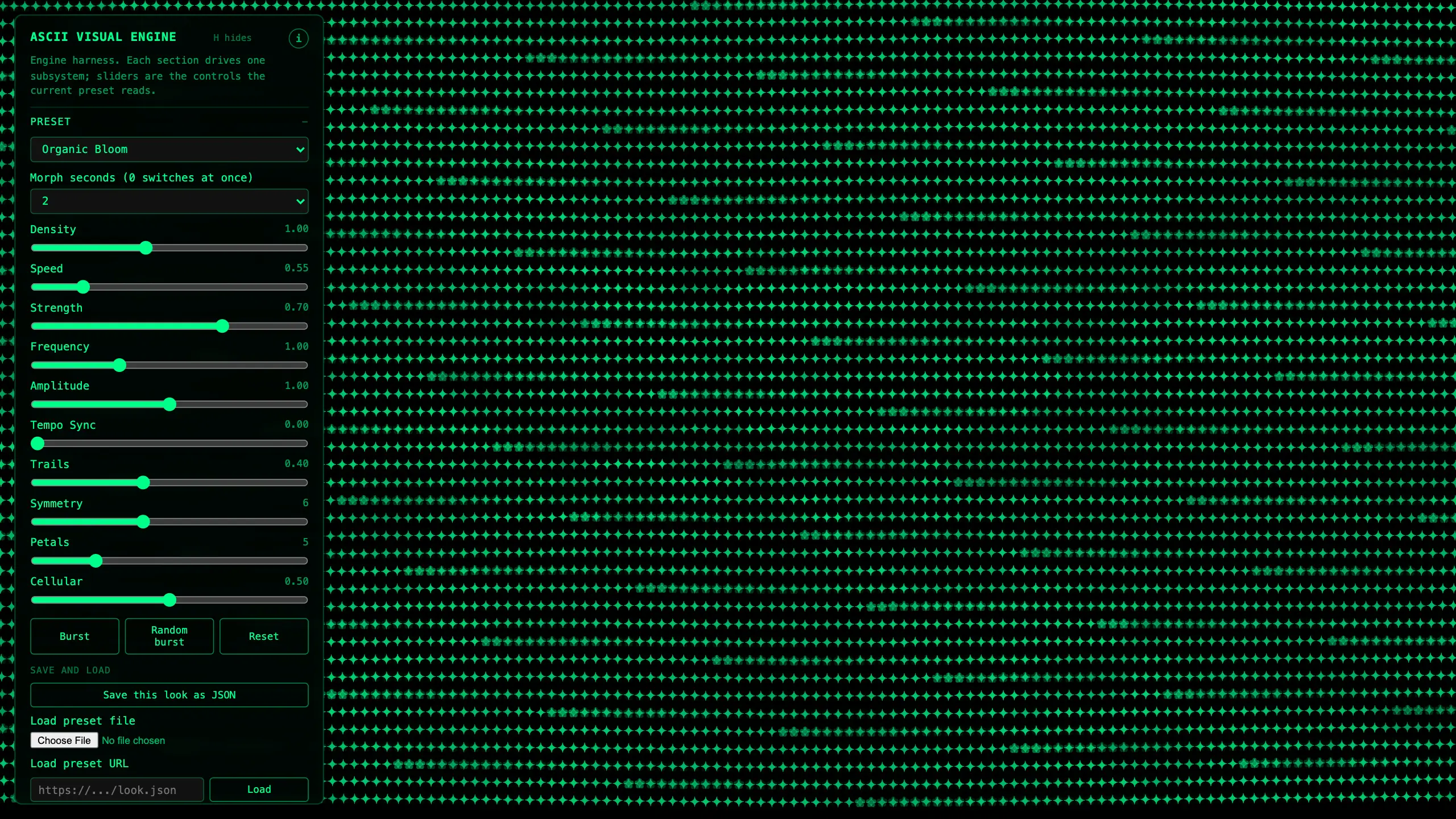
It is a library, not a product. Applications call one function with a canvas and a preset, get back a handle with a dozen methods, and build their own controls on top. Looks are JSON presets that the engine validates and interprets at runtime, so a new look is a file, not a fork.
It started as the motion language behind Ask Nate and is now the visual layer under Plantasonic, which is live at plantasonic.xyz. Hosts install it from a git tag; the harness at visual-engine.xyz exists to test it and show what it does.


30
built in presets across seven families
362
automated tests with coverage floors, run on every push
16.7
milliseconds per frame is the budget; every hero look measures under it at 1080p
I designed and built the engine end to end: the grid model, the plugin and event architecture, the motion and simulation systems, the glyph language, the source pipeline, the audio and MIDI mapping, the preset schema and validation, the export and recording paths, the facade, the harness, and the documentation and test suite that keep it honest.
Role
Designer, Engineer
Timeframe
2026
Disciplines
Creative Coding, Systems Design, Library API Design
Version 0.4.1, September 2026. Four releases in three weeks: 0.2.0 consolidated three drifting copies into one; 0.3.0 added the facade, nested presets, Retina scaling, pointer input, and the frame budget work that made WebGL unnecessary; 0.4.0 added beat detection, MIDI clock, seeds, morphing, video and input recording, and logos and type as sources; 0.4.1 hardened every entry point after the first host report. Canvas 2D is the renderer, with DOM as a fallback. Hosts pin a git tag. The remaining roadmap is demand driven: nothing starts until a host needs it.
Stack
TypeScript, Canvas 2D, Web Audio, Web MIDI, MediaRecorder, Vite, Vitest
Export
PNG, SVG, GIF, ASCII text, JSON scene, frame recording, WebM or MP4 video
Scripting
Safe public ScriptAPI over presets, controls, simulations, layers, and events
Platform
Any browser with canvas; zero framework dependency
Give several instrument projects one live ASCII visual layer without each of them carrying its own rendering code, and keep the engine fast enough for a laptop driving a screen.
Three projects wanted the same thing: live ASCII visuals that react to sound, input, and state. Building it three times would have meant three drifting copies. One engine with a stable contract lets each app spend its time on what makes it different.
Two users. The app author needs a canvas animating in a few lines and a way to reach deeper only when they need to. The look author needs to describe a visual in a file they can read, tweak, and share, without touching engine code. Both need it to hold 60 frames per second on an ordinary laptop.
Engine or product? The demo could have become the app, with its own chrome, routing, and controls. I kept it a harness. The library ships no UI, hosts own the shell, and the harness exists to test the engine and show what it does. The public surface had grown past a hundred methods because every host need was met by adding one, so 0.3.0 put a small facade on top rather than removing anything underneath: app authors see a dozen methods, look authors see nested presets where every group is optional, and the full engine stays reachable for whoever needs it.
Frame pipeline
Systems
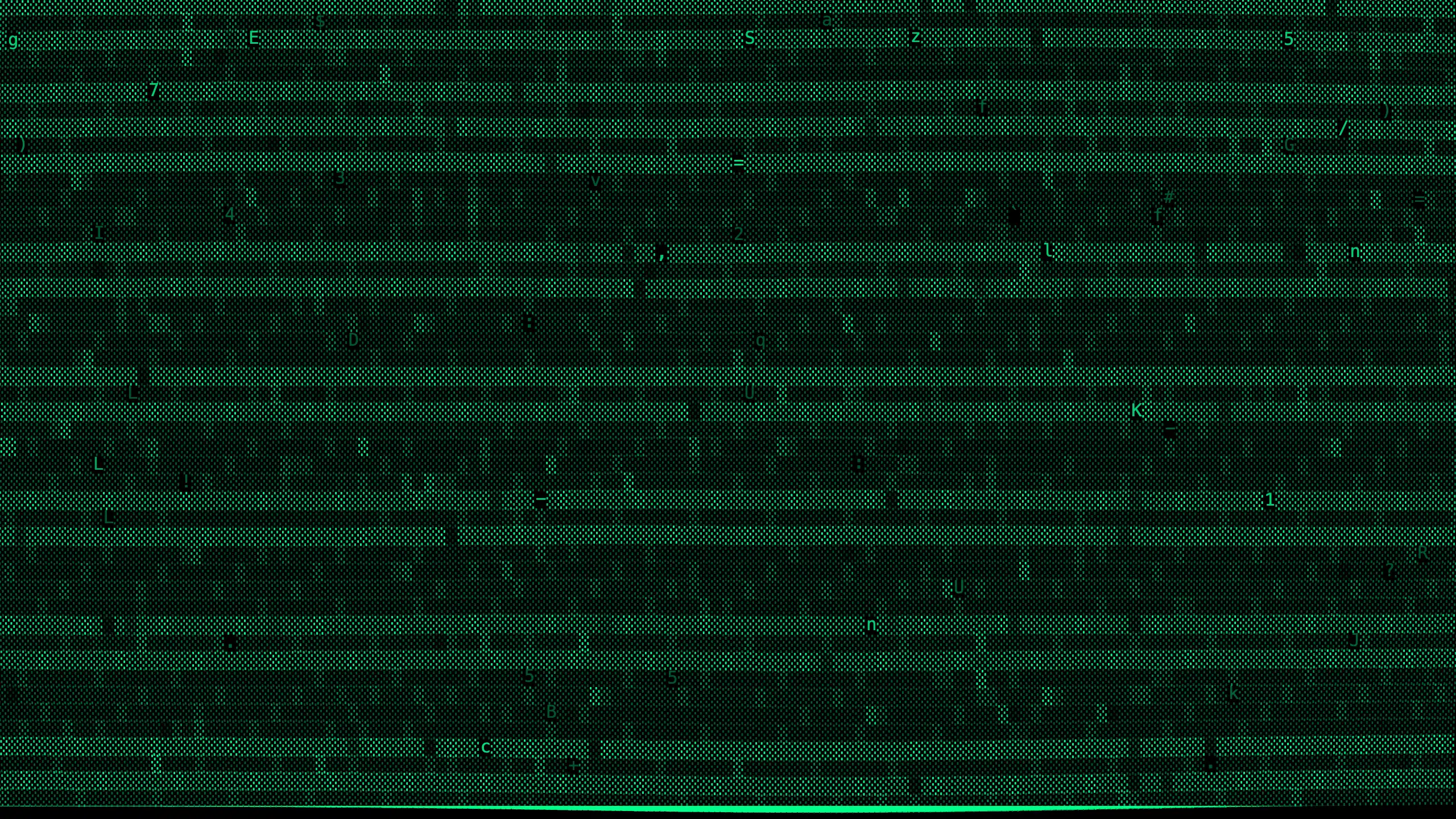
The target machine is a laptop driving a screen at 1080p, sometimes 4K, and the plan was to add a WebGL renderer when Canvas 2D ran out. It never did. The first measurement at 1920x1080 put three hero looks at 18 to 20 milliseconds a frame. Retina scaling behind a context transform, and a draw loop that sets the fill style once per brightness level instead of once per cell, brought all six to between 3 and 12. With the budget met, WebGL moved from next to demand driven, and the stub came out of the harness. The frame budget is re-measured and recorded with each release.
By September the engine existed in three places: the local tree with new validation and a reshaped demo, GitHub with CI and snapshot tests, and a copy vendored into a platform monorepo that had grown host driven methods for color, glyph override, and bass driven scale. Version 0.2.0 folded all three back into one branch with every test passing, and set the rule that hosts pin a git tag instead of carrying a copy.
The day Plantasonic went live, two of its five worlds went black about two seconds in while the engine still reported 60 frames per second. The host's adapter was passing a control value of NaN from an audio level read before the analyser had data, and one NaN cell reached the renderer's bucket lookup and threw every frame. The fix in 0.4.1 was not one guard but a boundary: every number that enters the engine is checked and a bad one is ignored with a warning that names it, the renderer treats a NaN cell as dark, and every preset is now run for four seconds in the test suite with the assertion that every cell stays finite. The warnings named the host's three bad controls the same afternoon.
The grid abstraction earned its keep: every feature since the first release, including morphing, input takes, and text as a mask, slotted in as a stage that reads and writes the same cells. The facade and the nested preset shape should have come first; a flat 59 field preset and a 105 method class were the honest cost of adding features one host at a time, and 0.3.0 paid it. The other lesson is about boundaries. A library that takes numbers from hosts has to assume some of them are wrong, and it took a live host to make that concrete.